

Driverless trucks could save £34 billion
12th October 2015
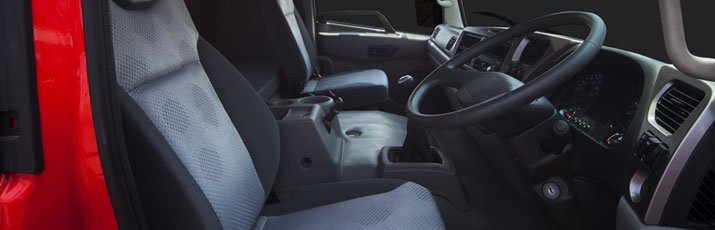
A new study by AXA UK has identified significant economic advantages from the advent of automated or ‘driverless’ haulage and logistics vehicles, including nearly £34bn in savings for the haulage industry.
The report, The Future Of Driverless Haulage, found that if these savings were passed on to consumers, they would equate to the equivalent of around £150 savings on grocery spend per household.
“The introduction of driverless technology has the potential to transform the haulage industry, with significant implications for safety and congestion, for the environment, for business and for the UK economy as a whole,” David Williams, the Head of Underwriting at AXA UK, said.
Specifically, the savings would come in the following form:
- Labour savings would arise as driverless vehicles reduce the need for drivers.
- Fuel consumption savings would arise because computer-controlled vehicles drive more efficiently than those driven by people.
- Insurance savings would arise if driverless vehicles proved less accident-prone and insurers were able to pass on the benefit to hauliers in the form of lower premiums.
- Vehicle utilisation savings would stem from the fact that driverless vehicles would be free from the restrictions of driver working hours.
As a result, the financial impact of introducing a significant number of driverless HGVs on the haulage industry is estimated at between £19.5bn and £47.5bn over ten years, with total cost savings of £33.6bn being the base case assumption.
“In commissioning this economic modelling,” David Williams added, “we wanted to discover the financial impact of introducing driverless haulage fleets. The results confirmed our suspicion that automated freight would not only be much more efficient and make the roads safer, but would also reduce the prices of the end products that we all buy.”
“Autonomous vehicles can help reduce the needless number of lives lost through road traffic accidents caused by human error and help to drive down fuel costs and consumption. HGVs alone were involved in 6,000 road accidents in 2013, comprising a total of 8,448 casualties, 258 of which were fatalities. These were preventable accidents.”